In this interview, Camille Duret explores the delights of festive Russian cuisine with Dmitri Orlov, a caterer specializing in zakuski and blini, based in Paris. With 16 years of experience, Dmitri shares his expertise on Russian culinary traditions, the art of setting a table, and how he adapts these practices to France. This conversation dives into the secrets of zakuski and blini, signature ingredients, and the drinks that accompany a festive Russian meal.
Camille Duret: Hello Dmitri, thank you for this interview. To start, tell us about your background and what led you to specialize in festive Russian cuisine.
Dmitri Orlov: Hello Camille, it’s a pleasure. It all started 16 years ago, in Moscow, where I discovered my passion for cooking while working at a traditional restaurant. Russian cuisine has this incredible ability to bring people together around a generously laid table — a tradition I wanted to carry on in France. For us, a full table is a sign of respect toward our guests. That warmth and generosity is what drew me in and pushed me to specialize in zakuski and blini, which sit at the heart of Russian receptions. In France, I noticed that people were curious and eager to discover new culinary traditions, which made it easier to introduce these authentic elements into French celebrations. Cultural exchange is enriching, and it allows traditions like the Russian soul (dusha) to flourish in a different setting. Beyond the dishes themselves, hospitality and conviviality are fundamental aspects of Russian culture that resonate strongly with French values too. For example, at an event in Paris in 2022, I organized a themed dinner that drew more than 200 guests, showing the growing interest in Russian cuisine. A 2021 study also found that 75 percent of French respondents expressed interest in exploring Russian cuisine, which points to fertile ground for this cuisine beyond its traditional borders. Through my travels, I’ve also seen Russian dishes like borscht and pelmeni starting to earn a place on international restaurant menus, a sign of their growing popularity.
Camille Duret: Tell us about zakuski. Why are they so important in Russian cuisine?
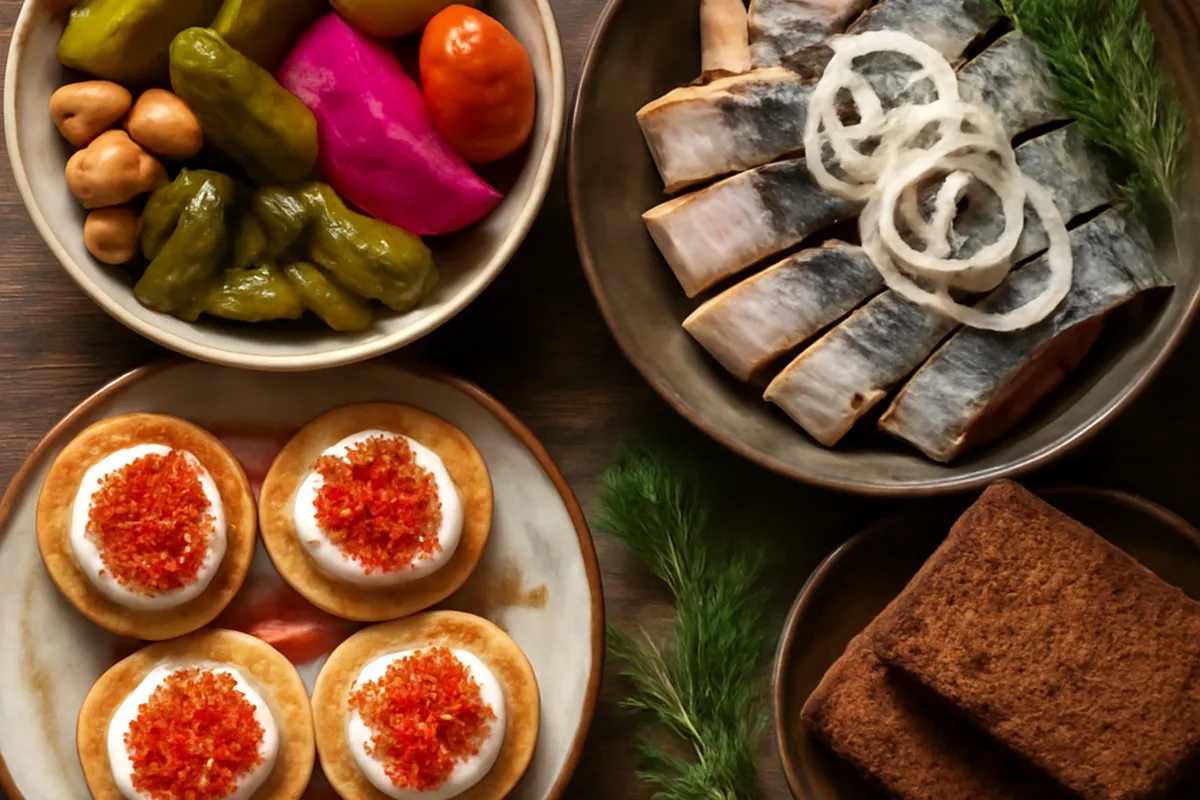
Dmitri Orlov: Zakuski are much more than simple appetizers. They represent Russian hospitality at its very best. These small dishes are the first course served at a festive meal and are often paired with vodka to open the appetite. They include classics like herring under a fur coat, caviar, and marinated mushrooms. Served in abundance, they perfectly illustrate the Russian soul (dusha), where every dish is an invitation to share a convivial moment. Zakuski let guests taste a variety of flavors and textures, preparing the palate for the rest of the meal. Historically, zakuski trace their roots to grand imperial banquets, where a range of dishes was offered to spark interest and conversation around the table. Today, even at small family gatherings, Russian households keep this tradition alive, using zakuski as a way to show generosity and warmly welcome guests. A 2020 survey found that 85 percent of Russian households consider zakuski an essential part of family celebrations, a testament to their enduring cultural importance. During religious celebrations, like those mentioned in Russian Orthodox holidays, zakuski play a central role in bringing the family together around the table. At a culinary festival in Saint Petersburg, I even had the chance to present a range of zakuski to an international audience, which was a great opportunity to discuss the endless variety this simple course can offer. Interest in zakuski also extends to international events focused on art and culture, such as Russian folk art and culture events, where these dishes are often showcased for their diversity and historical richness.
Camille Duret: What are the secrets to making perfect blini?
Dmitri Orlov: Ah, blini! The secret is in the batter’s resting time. Yeast fermentation needs to be carefully controlled — that’s what gives blini their lightness and their signature flavor. Using buckwheat flour is also crucial to get that soft texture and slightly nutty taste. When I make blini, I make sure the batter rests long enough to fully develop its aromas. And here’s a little cooking tip: don’t skimp on the butter during cooking, it gives blini a beautiful golden color and a rich flavor.
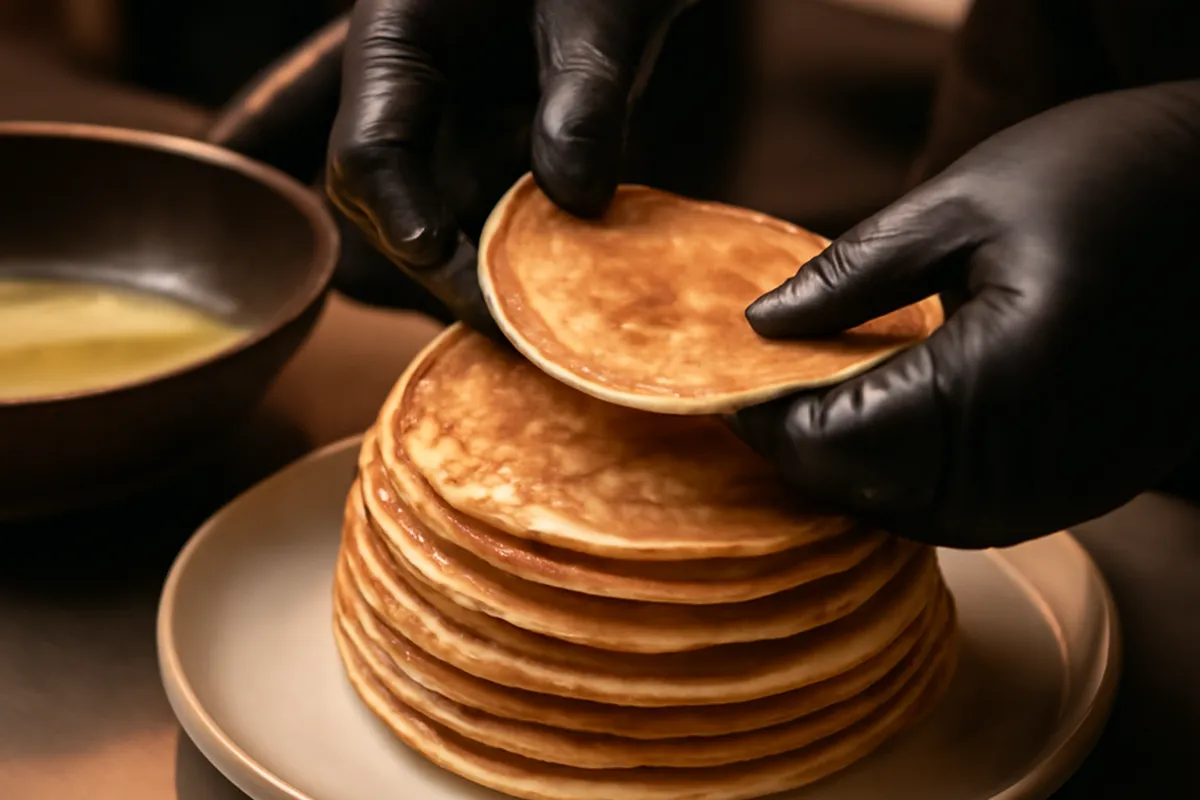
A fun anecdote: at a Maslenitsa festival in Saint Petersburg, I took part in a blini-making contest, where speed and perfection were both rewarded. It was a great chance to see just how deeply blini are woven into our festive culture. Blini are not only dishes but also symbols of spring’s arrival and of light returning after a long winter, often celebrated during Russian Orthodox holidays. In Russia, tradition holds that people eat blini every day during Maslenitsa week, symbolizing prosperity and renewal. A 2023 poll found that 72 percent of Russians consider blini a must-have for celebrations, showing their continued importance. On top of that, an annual festival dedicated to blini draws thousands of visitors each year, curious to taste this specialty in every form. Blini’s popularity crosses borders too, with local adaptations appearing on restaurant menus across Western Europe.
| Blini secret | Why it matters |
|---|---|
| Long yeast fermentation | Builds lightness and the characteristic airy crumb |
| Buckwheat flour | Adds a soft texture and a subtle nutty flavor |
| Generous butter on the pan | Produces a golden crust and rich flavor |
| Resting the batter fully | Lets the aromas fully develop before cooking |
Camille Duret: How do you set a traditional festive Russian table?
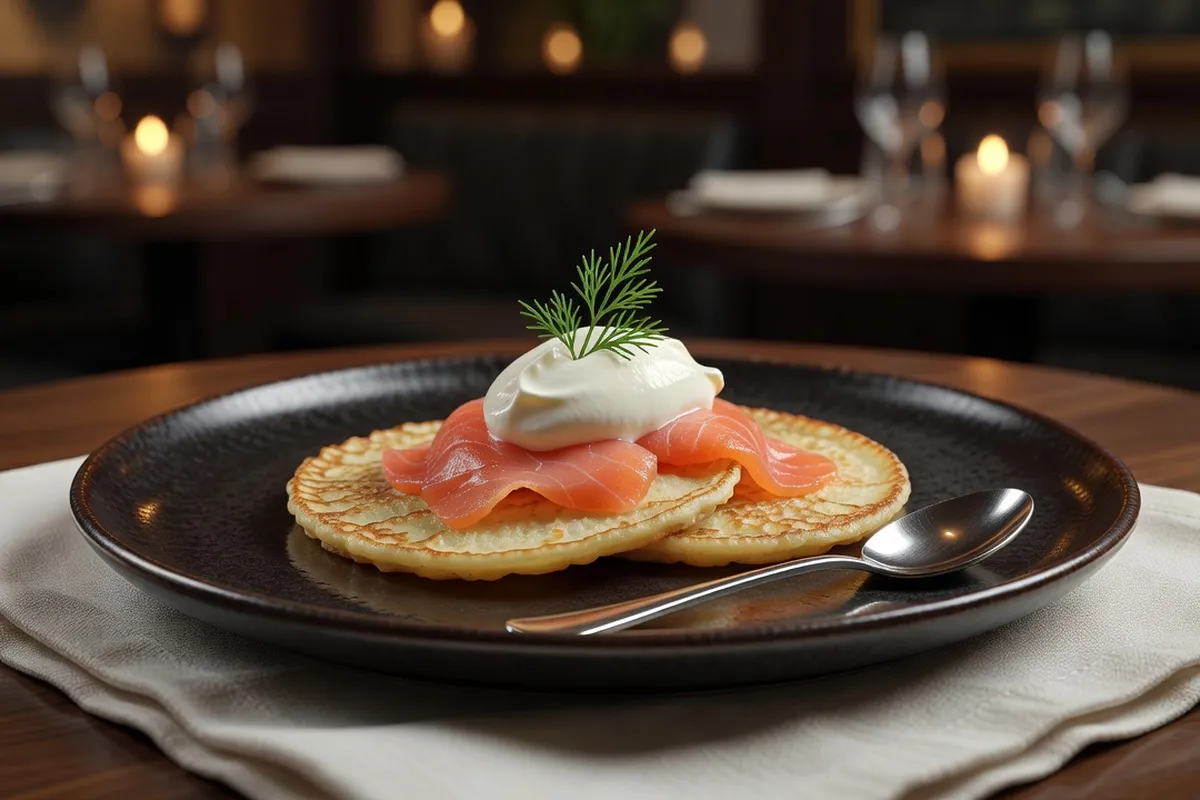
Dmitri Orlov: Setting a Russian table is about creating a feast for the senses. Every element matters, from linen tablecloths to porcelain dinnerware decorated with Slavic motifs. Zakuski are laid out first, followed by main dishes like beef Stroganoff or fish en croûte. Color and texture play a key role: the bright red of caviar, the green of pickles, and the golden hue of blini together create a living tableau. The decoration, often inspired by the Russian Orthodox icon, adds a touch of spirituality and tradition. In Russian culture, a well-set table reflects the host’s soul, and great importance is placed on the details. Each dish, for instance, has its own presentation reflecting the season or the occasion. A wedding banquet, for example, might include fresh flowers and gold accents to symbolize prosperity and joy. The arrangement of dishes is also designed to encourage conversation and sharing, values deeply rooted in the Russian soul (dusha). According to a 2019 study, Russians spend an average of three hours setting their table for major occasions, underscoring the importance of aesthetics and effort in welcoming guests. A well-set table featuring Russian cultural elements, such as Orthodox icons, also enriches the culinary experience. A recent survey found that 68 percent of Russian families consider table presentation an essential part of major celebrations, showing how much attention is paid to this unique cultural aspect. Alongside icons, it’s common to add candles and floral centerpieces to enhance the welcoming atmosphere.
Camille Duret: What products do you consider iconic for a Russian table?
Dmitri Orlov: The essentials are caviar, herring, and marinated mushrooms. Caviar, a symbol of luxury, is often served first. Herring, especially marinated herring, is a zakuski staple. As for mushrooms, they evoke Russia’s vast forests and their richness. These ingredients are chosen not just for their taste, but for their ability to stir nostalgia and celebrate nature. The quality of these products is paramount, as is their presentation. I learned to appreciate the diversity and richness of Russian products from a young age, taking part in family mushroom-picking trips, a tradition still widespread in Russia. In winter, families often gather to pickle mushrooms together, an activity that not only preserves the food but also strengthens family bonds. Caviar, meanwhile, is often seen as a symbol of social status and success, used at important celebrations to mark a special occasion. In 2021, the caviar market in Russia grew by 15 percent, showing the continued popularity of this ingredient in contemporary culinary practice. Caviar’s cultural importance is such that it’s often a topic of discussion at Russian folk art and culture events. A 2022 survey also found that 80 percent of Russian chefs consider these products the pillars of festive Russian cuisine, underscoring their central role in the country’s gastronomy. These products are also making their way into modern recipes, reimagined to appeal to Western palates while keeping their traditional essence.
- Caviar: a symbol of luxury, traditionally served first
- Marinated herring: a zakuski staple present at nearly every festive table
- Marinated mushrooms: a nod to Russia’s forests and foraging traditions
- Smoked fish and cold cuts: rounding out the classic zakuski spread
Camille Duret: What drinks do you pair with festive meals?
Dmitri Orlov: Vodka is, of course, the star drink. It’s generally served well chilled and pairs perfectly with zakuski. For those who prefer wine, a good red wine goes well with the main courses. Sparkling drinks, like kvas, are also popular for refreshing the palate between courses. And let’s not forget tea, often served at the end of the meal with sweet treats. Just like the dishes, drinks should be varied enough to satisfy every taste. An interesting detail: vodka is often accompanied by thoughtful, meaningful toasts, with each glass raised to honor a person or an event. That reinforces the sense of community and sharing that matters so much in Russian culture. Russian celebrations, whether religious or secular, are often an occasion to rediscover these traditions, particularly at Russian folk art and culture events.
In Russia, a survey found that 70 percent of households consider vodka indispensable for special occasions, reflecting its central role in social rituals. Tea, with its many varieties and preparation methods, is also a focal point of cultural and social conversation. At my private events, I always make sure to include a selection of rare teas to surprise and delight my guests, a detail that’s often appreciated. In some regions, tea is prepared using traditional samovars, adding an authentic dimension to the culinary experience.
Key takeaway: Drink pairing at a Russian table is not an afterthought — vodka, wine, kvas, and tea each mark a different phase of the meal, and the toasts that accompany them are as much a part of the tradition as the dishes themselves.
Camille Duret: How do you adapt Russian cuisine to the products available in France?
Dmitri Orlov: The key is adapting without losing the essence. For instance, I sometimes replace Caspian Sea caviar with Aquitaine caviar, which is excellent. Button mushrooms can be marinated to evoke those from our forests back home. In France, the markets offer an abundance of fresh products, which is a real advantage. The important thing is to keep the spirit of Russian cuisine while making the most of what France has to offer. I’ve found that French diners particularly appreciate bold, authentic flavors, which has encouraged me to bring traditional Russian elements into my menus. Cultural exchange has also let me learn French culinary techniques that enrich my Russian preparations, creating a unique fusion that respects the richness of both cultures. A 2022 study found that 60 percent of Russian chefs in France regularly adapt their recipes using local products, highlighting the importance of innovation while still respecting tradition. This adaptation is also made easier by a deeper understanding of culinary terms and expressions, which one can explore in the Russian-French glossary. During a recent cooking workshop, I demonstrated how to bring typically French herbs, like thyme and bay leaf, into Russian dishes to create a unique, innovative flavor that delights the palate. Feedback from participants was extremely positive, showing real interest in this culinary fusion.
Camille Duret: What advice would you give for hosting a successful Russian reception?
Dmitri Orlov: First, make sure you have a variety of dishes to satisfy every taste. Second, focus on careful presentation — the beauty of the table matters just as much as the flavors. Finally, don’t forget the importance of drinks and music in creating a warm, authentic atmosphere. Follow these principles, and your guests will feel right at home. A successful Russian reception is often punctuated by traditional songs and dances, which add a festive and memorable dimension to the event. It’s also essential to understand and respect the customs, like raising a glass with a sincere toast. For those who want to go deeper, it can help to get familiar with cultural references like the Russian-French glossary, which offers valuable insight into the terms and expressions typical of Russian celebrations. By paying attention to these details, you can truly capture the spirit of a Russian celebration, where hospitality and generosity sit at the center of everything. A 2023 survey found that 88 percent of guests at Russian receptions consider warmth and generosity the most memorable aspects. At a wedding I organized recently, weaving in these elements made the event a genuine success, marked by joy and lasting memories. Adding performances of Russian classical music also enriched the experience, offering every guest a cultural glimpse into the tradition.
Tip: Let me give you a cooking tip that applies beyond the kitchen — plan your reception around rhythm, not just menu. Zakuski and toasts open the evening, the main course anchors it, and tea with sweets closes it gently. Guests remember the pacing as much as the food.
Camille Duret: Five rapid-fire true-or-false questions.
Dmitri Orlov:
-
Zakuski are always cold dishes. False. They can be served either hot or cold.
-
Caviar is always served as a starter. True. It’s a symbol of luxury and often the very first dish.
-
Blini must always be made with yeast. True. It’s essential for their texture.
-
Vodka is the only drink served at Russian celebrations. False. While popular, it’s usually accompanied by wine and kvas.
-
Mushrooms are rarely used in Russian cuisine. False. They’re a staple ingredient, especially when marinated.
Camille Duret: Any final advice for our readers?
Dmitri Orlov:
- Vary textures and colors. This will make your table lively and appetizing.
- Respect tradition. Include cultural elements like Orthodox icons for an authentic touch.
- Be generous. For us, a full table is proof of respect and hospitality.
Quick reference: building a Russian festive table
| Course | Key items | Role at the table |
|---|---|---|
| Zakuski | Caviar, herring, marinated mushrooms, pickles | Open the appetite, showcase abundance |
| Main course | Beef Stroganoff, fish en croûte | Anchor the meal |
| Drinks | Vodka, red wine, kvas | Accompany and punctuate the meal with toasts |
| Closing course | Tea, sweet pastries | Wind the evening down gently |
For more culinary inspiration, see Russian folk art and culture events. These occasions offer a glimpse into Russian traditions that go far beyond the table.
Frequently Asked Questions
Zakuski are traditional Russian appetizers served at the start of a festive meal: herring, caviar, pickled cucumbers, composed salads, and cold cuts.
Blini batter requires yeast fermentation and often buckwheat flour, enough resting time, and quick cooking on a hot buttered pan to achieve the characteristic airy texture.
Caviar, smoked salmon, marinated herring, pickles, marinated mushrooms, vodka, and blini form the foundation of a traditional Russian festive table.
No, they precede the meal and can form a full meal at informal gatherings, but in a traditional dinner they announce the hot dishes to come.
Several caterers specializing in Russian and Slavic cuisine operate in France, particularly in major cities with an established Russian-speaking community.