
Introduction: An Ethnologist’s Perspective on Russian Character
Dr. Irina Sokolova is a senior researcher at the Brussels Institute of Comparative Cultures, where she has spent eighteen years studying Slavic cultural identity. Born in Saint Petersburg and educated in both Russia and Western Europe, she occupies a unique position: insider and observer simultaneously. Her current research focuses on identity transformations in the Russian diaspora following 2022. We met her in her office at the institute to discuss what it means to speak of “Russian character” in 2026.
Five Russian Character Traits Discussed in This Interview
| Trait | Core dynamic | Discussed in relation to |
|---|---|---|
| Public/private split | Reserve with strangers, intensity with svoi | Dvorovaya kultura (courtyard culture) |
| Affective collectivism | Chosen inner circle over anonymous institutions | The mir tradition and blat |
| Compliance theater | Surface acceptance masking creative resistance | Attitudes toward the nachalnik and siloviki |
| Dusha as social principle | Judging others by emotional depth, not status | Hospitality and svoi/chuzhoi distinction |
| Identity fracture | Multiple simultaneous ruptures post-2022 | Diaspora communities in Western Europe |
Interviewer (Clara Dubois): Dr. Sokolova, researchers and journalists have been writing about “Russian character” for over two centuries. Is it still a valid concept, or has it become a cliché?
Dr. Sokolova: It’s both, and that’s precisely what makes it interesting. The cliché exists because there is something real underneath it — but the real thing is far more complex than the cliché admits. When I say “Russian character,” I don’t mean a fixed genetic essence. I mean a set of cultural patterns, emotional dispositions, and relational habits that emerge from specific historical and geographical conditions. These patterns are real. They can be observed, compared, and analyzed. But they are not destiny. Russians are not prisoners of their character — they perform it, negotiate it, sometimes reject it.
The problem with most discussions of Russian character in Western media is that they oscillate between two equally distorting poles: the romanticized “mysterious Slavic soul” and the dehumanizing “authoritarian robot.” Neither captures what I observe in my research. Real Russian character lives in the space between those poles.
Interviewer: Where would you start, if you had to describe that space?
Dr. Sokolova: I would start with what I call the public/private split. In the cultural traditions of Russian Traditions, this appears again and again: the sharp distinction between the face you show the world and the face you show those you trust. The concept of dvorovaya kultura — courtyard culture — is illuminating. In Soviet-era apartment complexes, and even before in village life, the dvor (courtyard) was a semi-private space: not home, but not public street either. It was where real life happened. Children played there, adults gossiped, conflicts were aired and resolved. The dvor created a layer of community between the family and the anonymous outside world.
This spatial logic has become a psychological logic. Russians maintain a protective reserve with strangers — which non-Russians often read as coldness or hostility — while simultaneously being capable of extraordinary intimacy with people they consider svoi (their own). The transition from chuzhoi (outsider) to svoi is one of the most significant social acts in Russian relational culture. And once you’ve made that transition, the obligations are enormous. You don’t just have an acquaintance — you have someone whose problems are your problems, whose joys are shared, whose phone call at 3 AM you answer.
Key takeaway: The public/private split is not hostility toward strangers — it is a protective reserve that dissolves once someone crosses from chuzhoi (outsider) to svoi (one’s own), at which point the relationship carries far greater obligation than most Western friendships.
The Collective and the Individual: A Complex Inheritance
Interviewer: Russians are often described as collectivist. But in the post-Soviet period, that seems to have shifted dramatically toward individualism. How do you read that?
Dr. Sokolova: The collectivism question is endlessly misunderstood, particularly in cross-cultural psychology, where surveys consistently show Russians as more collectivist than Western Europeans. But the historical layers matter enormously.
The original collectivism, rooted in the village commune called the mir, was a practical arrangement for shared land use, mutual labor, and collective decision-making. This wasn’t ideological — it was agricultural pragmatism. When the harvest needed bringing in, the entire village worked together. When someone’s roof collapsed, the community rebuilt it. This created deep habits of mutual aid and a genuine sense that individual fate was inseparable from collective fate.
Soviet collectivism appropriated this tradition but transformed it into something quite different — a top-down, ideologically enforced uniformity that actually destroyed many authentic communal bonds by making all association politically suspect. The mir solidarity was largely genuine. Soviet “collectivism” was often coerced.
What we see in contemporary Russia and in diaspora communities on topics covered by Russian Diaspora in Europe is what I’d call affective collectivism — the individual chooses their inner circle intensely and carefully, and within that chosen group, maintains deeply communal emotional bonds. It’s not the traditional mir and it’s not Soviet uniformity. It’s a third thing: a voluntarily constructed collective of trusted people, maintained with an intensity that startles those accustomed to lighter social bonds.
Dr. Sokolova identifies three distinct historical layers of Russian collectivism:
- Village commune collectivism (mir) — practical, agricultural, based on mutual labor and shared land use
- Soviet collectivism — top-down, ideologically enforced uniformity that often destroyed authentic communal bonds
- Contemporary affective collectivism — a voluntarily chosen inner circle maintained with high emotional intensity
Interviewer: And this chosen collective becomes the substitute for broader civic structures?
Dr. Sokolova: Often, yes — and this is one of the most significant features of Russian social organization to understand. In societies with high institutional trust, people rely on anonymous systems: courts, contracts, consumer protection, police. In Russia, institutional trust has historically been very low — and with good reason, given the turbulent history documented in Russian History. When you can’t trust the system, you trust people. Specific, known, personally vetted people.
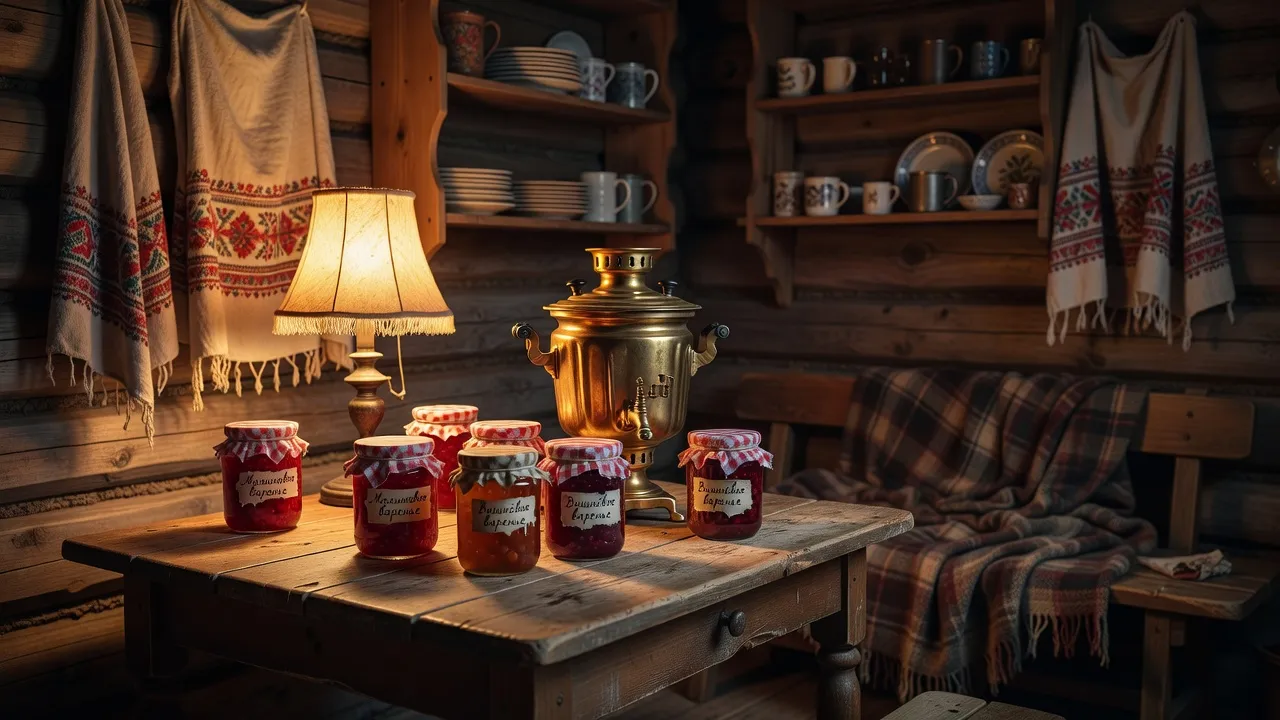
This is where blat comes in. Blat is the system of informal favors, connections, and reciprocal obligations that has allowed Russians to navigate bureaucratic systems for centuries. It’s not corruption in the Western sense — money doesn’t necessarily change hands. It’s the cultivation of relationships that can be activated when needed. Your doctor friend gets you an appointment. Your neighbor at the ministry stamps the form. Your cousin knows someone who knows someone.
Western observers sometimes judge this as corruption or nepotism, but that misses its social logic. In a context where official channels are unreliable, blat is rational relationship management. It also generates genuine warmth and obligation — the relationship isn’t purely transactional, because blat is embedded in ongoing social bonds. You do favors for people you actually like. The system of obligation is inseparable from the system of affection.
Common mistake: Interpreting blat as simple corruption. Dr. Sokolova is explicit that money rarely changes hands — blat is relationship management under conditions of low institutional trust, and it generates real affection alongside real obligation.
Authority, Compliance, and the Art of Creative Resistance
Interviewer: Let’s talk about the relationship with authority. Russia has a long history of autocratic governance. Has this shaped the Russian character in specific ways?
Dr. Sokolova: Profoundly, but not in the simple way often assumed. The common Western narrative is: “Russians are used to authority, so they accept it passively.” This is empirically wrong. Russian history is filled with rebellion, resistance, insubordination, and creative circumvention of authority at every level.
What’s accurate is that there are two simultaneous layers in the Russian relationship to power. On the surface, there is what I call compliance theater — a public performance of acceptance that costs relatively little and avoids direct confrontation with the nachalnik (boss, superior). You attend the meeting, you sign the paper, you say the right things. This is rational risk management, not genuine submission.
Underneath, the resistance is constant and creative. Russians are masters of what the political scientist James Scott called “weapons of the weak”: working slowly, feigning incomprehension, finding technical loopholes, building informal structures that achieve what the official structure forbids. The Soviet-era expression oni delayut vid, chto platят, my delayem vid, chto rabotaem — “they pretend to pay us, we pretend to work” — captures this perfectly. It’s not despair. It’s a sophisticated adaptation strategy.
Interviewer: And the concept of siloviki — the security services as a social class — how does that fit into this picture?
Dr. Sokolova: The siloviki represent the institutional crystallization of this relationship with power. The word means “power people” — those connected to the security, military, and law enforcement apparatus. They have functioned as a distinct social class in Russia for centuries, predating the Soviet period. Understanding Russian society requires understanding that this class has its own cultural codes, loyalty systems, and definition of what constitutes legitimate authority.
What’s sociologically interesting is that ordinary Russians have maintained a remarkably consistent ambivalence toward this class across centuries. There is cultural respect for the idea of the strong state as protector — rooted in the vulnerability of the Russian plains to invasion, visible in folk tales and historical memory. And there is simultaneously a deep popular tradition of mocking, undermining, and outwitting the authorities in daily life. This ambivalence is not a contradiction to be resolved. It’s a stable cultural equilibrium.
Dusha and Generosity: The Social Dimension of the Russian Soul
Interviewer: We’ve discussed the concept of dusha in other contexts. How do you observe it functioning as a social principle?
Dr. Sokolova: The dusha is not just a poetic notion — it’s a genuine organizing principle of social behavior. In my fieldwork, I consistently observe that Russians judge others primarily by their capacity for emotional depth and generosity of spirit. Someone who is clever but emotionally shallow is worth less, in this cultural calculus, than someone who is less educated but has dusha — who gives fully, feels deeply, and doesn’t calculate their emotional investments.
This explains one of the features of Russian hospitality that most impresses foreigners: the capacity to mobilize everything one has for a guest, even when resources are limited. The virtue being expressed is not affluence but expansiveness of soul. A simple meal served with full attention and warmth carries more social capital than an expensive dinner accompanied by distraction. The act of hosting is a performance of dusha.
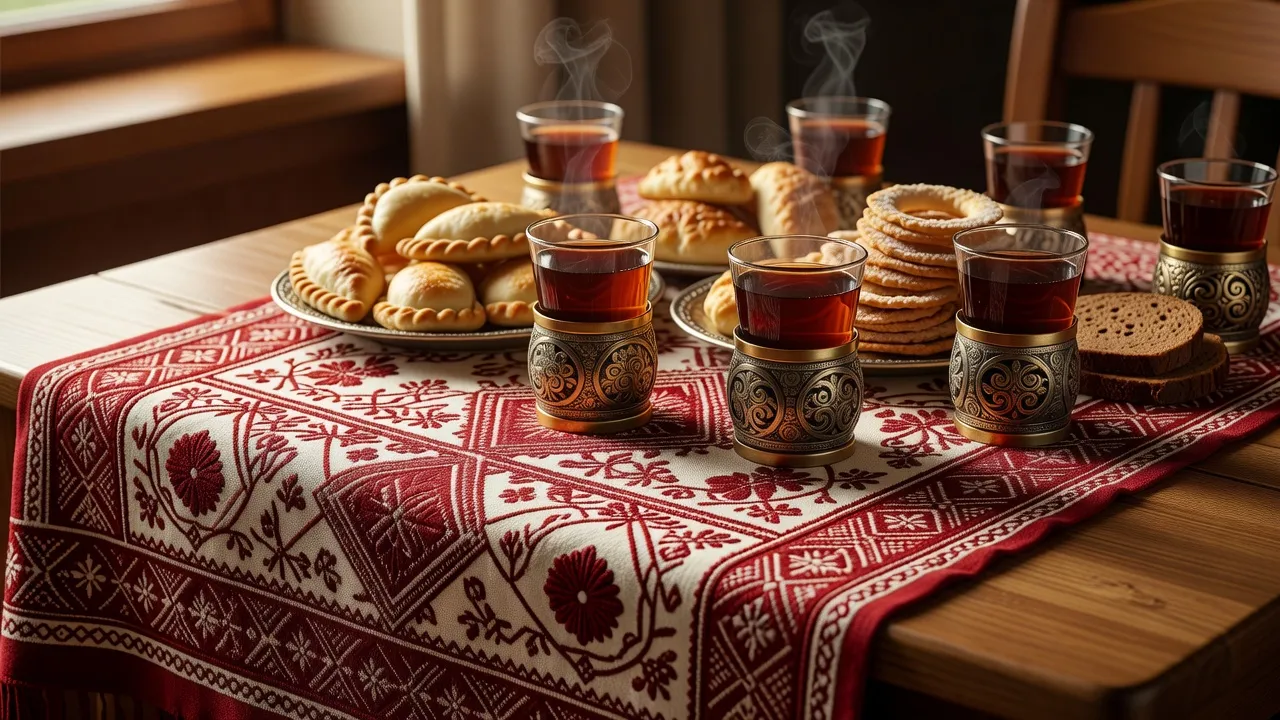
The distinction between svoi and chuzhoi that we discussed earlier is centrally a distinction based on whether someone is perceived to share your emotional register — whether they have a dusha that resonates with yours. This is why Russians can be so suspicious of performed warmth: they are very sensitive to whether genuine depth lies beneath social pleasantness. Superficial friendliness is read as a marker of chuzhoi, while a certain roughness combined with genuine emotional availability marks svoi.
Interviewer: This seems to create a very specific challenge in intercultural encounters.
Dr. Sokolova: Exactly. The Russian cultural script expects that real relationships are built slowly, through accumulated acts of genuine exchange, and that once built, they are maintained with great intensity and obligation. This script often clashes with Anglo-Saxon or Northern European scripts where friendliness is quick, social relationships are relatively low-intensity, and the boundary between friendship and acquaintance is fluid.
A Russian may interpret quick Anglo-American friendliness as false — a performance rather than a genuine opening of dusha. Meanwhile, the American or British person may interpret the Russian’s initial reserve as hostility rather than the social testing it actually is. Both misread each other catastrophically. The Russian ends the encounter thinking “this person is superficial and untrustworthy.” The Westerner ends it thinking “this person is cold and unfriendly.” Neither is accurate. Both are reading through a cultural frame the other doesn’t share.
The practical solution — which I recommend to anyone working with Russian colleagues, partners, or friends — is to invest in sustained, non-transactional contact: shared meals, conversations on subjects that matter, willingness to be vulnerable. Don’t try to accelerate the relationship. The warmth, when it comes, is worth the patience.
Russian Character in 2026: Identity After the Fracture
Interviewer: How has the period after 2022 affected Russian cultural identity, both in Russia and in the diaspora?
Dr. Sokolova: It’s the most significant cultural rupture since 1991, and in some ways more profound, because it’s not just a political and economic disruption — it’s an identity fracture. I work primarily with diaspora communities, and what I observe is that many Russians outside Russia are navigating multiple simultaneous crises of identity simultaneously.
First, there’s the rupture with the homeland — not just geographical distance, but the experience of seeing something you loved and identified with associated globally with actions that horrify you. This creates a particular form of grief that has no clean cultural script. Second, there’s the rupture with the perception of the outside world. Russians in Western Europe are experiencing a significant change in how they’re perceived and treated — which forces a renegotiation of who they are in relation to the chuzhoi world.
Third — and this is perhaps the most psychologically complex — there are the ruptures within families and friendship networks, as people who share deep svoi bonds discover irreconcilable differences in how they understand what has happened. When your svoi fractures, it shakes something very deep in the Russian cultural structure of belonging.
Interviewer: Do you see new cultural formations emerging from this rupture?
Dr. Sokolova: Yes, and they’re fascinating. I see a renewed engagement with Russian cultural heritage among diaspora communities — with the literature, the music, the religious tradition. There’s a sense of: “We can distinguish the culture from the current politics. We can hold onto the culture.” Institutions like cerclepouchkine.com that maintain Russian cultural life in diaspora contexts have seen increased engagement.
I also see a remarkable creativity in self-description. People are developing new hyphenated or qualified identities: “Russian-European,” “cultural Russian,” or identifying with specific regional or historical identities (Petersburg, not Russia; Russian of the 19th century, not Russia today). These are identity strategies for navigating an impossible situation, and they reveal something characteristic of Russian cultural adaptability — the capacity to find creative solutions within constraints.
What doesn’t change, through all of this, is the underlying depth. The dusha may be in crisis. But it remains the organizing principle of how these people relate to the world, to each other, and to themselves. That, I think, is what Russian character ultimately means: not a fixed set of traits, but a particular depth of engagement with existence that persists through transformation.
Interviewer: Dr. Sokolova, thank you for this conversation.
Dr. Sokolova: Thank you for the thoughtful questions. These are the conversations that need to happen — carefully, without simplification, with genuine curiosity. That’s the only approach the subject deserves.
Frequently Asked Questions
Ethnologists identify several recurring traits: the public/private split (reserve in public, intensity in private), collective identity rooted in the mir tradition, a complex relationship with authority that mixes surface compliance with creative resistance, and the centrality of dusha — the soul — as the organizing principle of emotional life.
This apparent contradiction stems from the deep distinction between the public and private spheres in Russian culture. The courtyard culture (dvorovaya kultura) created tight-knit inner circles of absolute trust, while the outside world required protective reserve. Crossing from one sphere to the other is a significant act of social trust.
No. Pre-Soviet Russian collectivism, rooted in the village commune (mir), was based on mutual aid and shared land stewardship, not ideological uniformity. Soviet collectivism imposed a top-down version of this. Contemporary Russians navigate an affective collectivism — choosing their own inner circle — quite different from both.
According to researchers who study diaspora communities and Russia-watchers, the period after 2022 has created a significant identity fracture. Russians abroad, particularly in Western Europe, are navigating multiple ruptures: from their homeland, from the outside world's perception of them, and sometimes from family members who hold different political views.
Blat refers to the system of informal favors, connections, and reciprocal obligations that has historically allowed Russians to navigate bureaucratic systems. It reveals an aspect of Russian character that combines deep distrust of official channels with remarkable ingenuity in finding human solutions — bypassing the system through personal relationships.