Kievan Rus: The Founding of a Civilisation
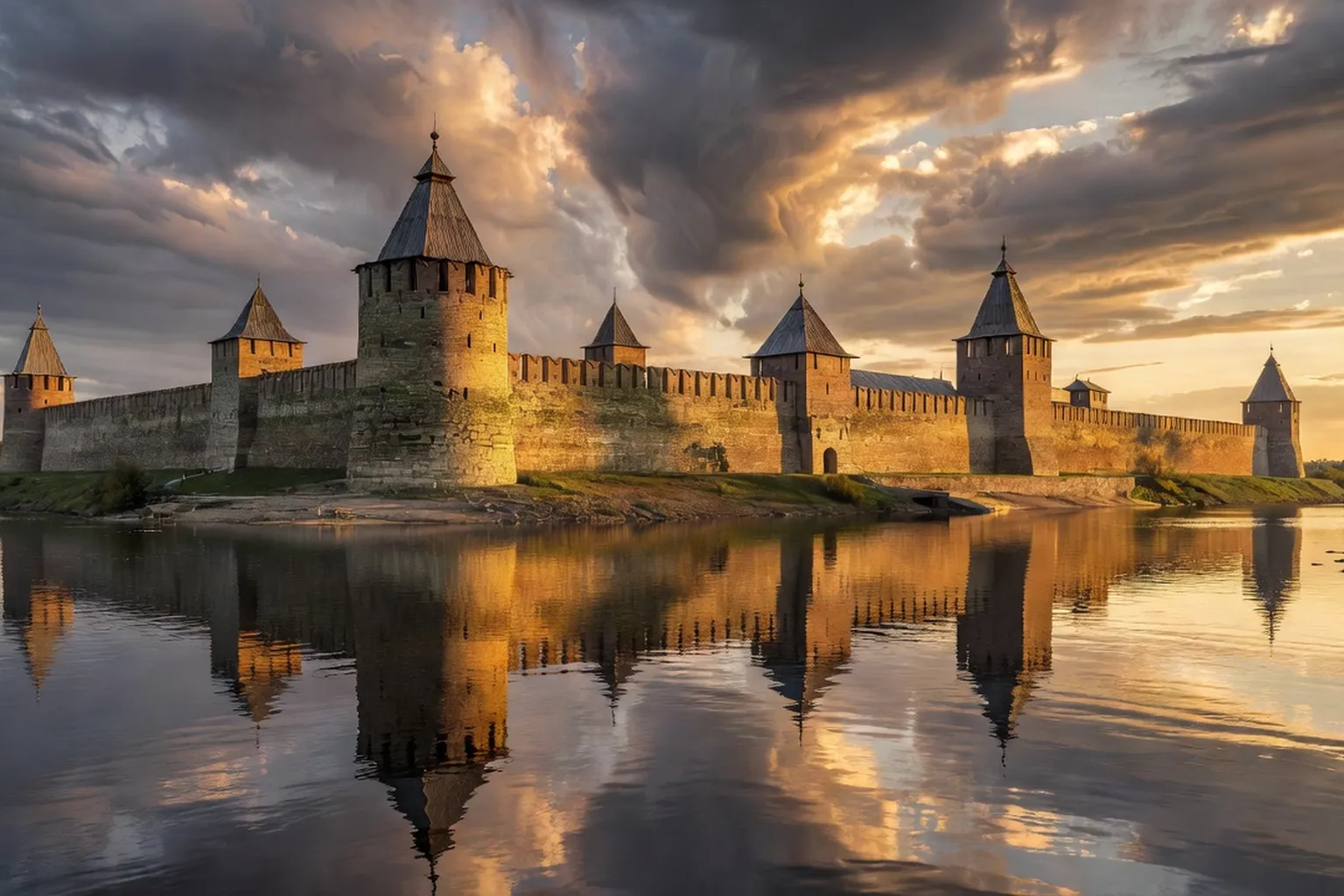
The origins of the Russian state are tangled in the contested relationship between Slavic and Varangian (Viking) peoples in the 9th century. The Primary Chronicle (Povest Vremennykh Let, c. 1113) records that the warring Slavic tribes of the northwestern forests invited a Varangian chieftain named Rurik to rule over them in 862, bringing order from outside. Modern historians dispute the details but agree on the essential picture: the early Russian state emerged from the interaction between Slavic agricultural populations and Scandinavian warrior-traders who controlled the great river routes connecting the Baltic to the Byzantine Empire.
The founding of Kiev as the capital of this entity by Rurik’s successor Oleg around 882 — and his famous nailing of his shield to the gates of Constantinople in 907 — established the characteristic ambivalence of early Russian identity: the state was organised by northern warriors, populated by Slavic farmers, and perpetually oriented toward the wealthy civilisation to the south. The Varangian route from the Varangians to the Greeks, running from the Baltic through the Dnieper River system to Constantinople, was the commercial and cultural artery of Kievan Rus.
Key takeaway: The Baptism of Rus in 988 under Vladimir I — bringing Byzantine Christianity, literacy, art and law — remains the single most consequential event in Russian history, shaping the country’s civilisational orientation for the next thousand years.
The Baptism of Rus in 988 under Vladimir I, which brought Byzantine Christianity, literacy, art and law, was the most consequential single event in Russian history. Orthodox spirituality and Russian cultural identity have been intertwined ever since. Vladimir’s son Yaroslav the Wise (1019–1054) brought Kievan Rus to its political and cultural peak: he codified Russian law in the Russkaya Pravda, married his daughters to the kings of France, Hungary and Norway (Anna Yaroslavna became Queen of France as wife of Henri I), and built the Cathedral of Saint Sophia in Kiev as a rival to Constantinople’s Hagia Sophia.
The collapse of Kievan unity in the 12th century — the fragmentation into competing principalities — left Russia mortally vulnerable to the catastrophe that followed. In 1237, the Mongol armies of Batu Khan swept westward from Central Asia in the most devastating military campaign Europe had ever experienced.
The Mongol Yoke and the Rise of Moscow
The Mongol invasion of 1237–1241 annihilated a civilisation. Kiev, Vladimir, Ryazan, Suzdal — city after city was burned to the ground; the populations massacred or enslaved. Contemporary accounts describe piles of bones so large that they blocked rivers; the stench of unburied dead could be smelled miles away. Archaeological evidence confirms the chronicles: the cities of Kievan Rus show a sudden, catastrophic break in occupation around 1240.
The Tatar Yoke — Russian suzerainty to the Golden Horde — lasted approximately 240 years, from 1240 to 1480. Key milestones of this long relationship include:
- 1237–1241 — Mongol invasion devastates Kiev, Vladimir, Ryazan and Suzdal
- 1327 onward — Moscow’s princes serve as tribute collectors for the Khan, enriching themselves
- 1380 — Battle of Kulikovo: Dmitry Donskoy wins the first major Russian victory over the Horde
- 1480 — the Great Stand on the Ugra River ends Mongol suzerainty without a decisive battle Russian princes were required to receive their patents of rule (yarlyk) from the Mongol Khan; they travelled to the Golden Horde capital at Sarai to prostrate themselves before rulers they privately despised. The tribute extracted was enormous; raids continued for generations after the main invasion. Yet the Mongols did not establish direct administrative control: they ruled through the existing Russian princes, demanding tribute and obedience but not attempting cultural assimilation.
Moscow’s rise from minor principality to dominant power began under Ivan I (Kalita, “Moneybags”, died 1340), who used his position as tribute collector for the Mongols to enrich his principality at the expense of rivals. The decisive moment came at the Battle of Kulikovo in 1380, when Dmitry Donskoy led a Russian coalition force against the Golden Horde and won the first major Russian victory against the Mongols — though Mongol raids continued for another century.
The symbolic end of the Tatar Yoke came in 1480, when Ivan III (the Great) and the Khan of the Great Horde faced each other’s armies across the Ugra River for months — and the Khan, unwilling to risk battle, eventually withdrew. Ivan then pursued the consolidation of Russian territory: he married Sophia Palaiologina, niece of the last Byzantine Emperor, adopted the double-headed eagle as the Russian state symbol, and proclaimed himself Gosudar Vsea Rusi (Sovereign of All Rus). The idea of Moscow as the Third Rome — heir to fallen Byzantium — gave ideological substance to Russian imperial ambition.
Russian literature has always been fascinated by this period: Pushkin wrote Boris Godunov about the dynastic crisis of the 1590s–1600s; Eisenstein’s Alexander Nevsky depicted the 13th-century prince who navigated between the Mongols in the east and the Teutonic Knights in the west; the Mongol period remains a live presence in Russian cultural memory.
Peter the Great: Modernisation by Force
No ruler in Russian history transformed the country more radically than Peter I (1672–1725). The contrast between the Russia he inherited — a largely medieval Muscovite kingdom, cut off from European developments, ruled by tradition-bound boyar nobles and an Orthodox Church hostile to foreign influence — and the Russia he left behind is almost impossible to exaggerate.
Peter’s Grand Embassy of 1697–1698 — a diplomatic mission in which the young Tsar travelled incognito through the Netherlands, England and Germany for seventeen months, working as a shipwright in Zaandam, visiting factories, hospitals, museums and universities — gave him a direct, concrete understanding of European technology and political organisation. He returned determined to transform Russia root and branch.
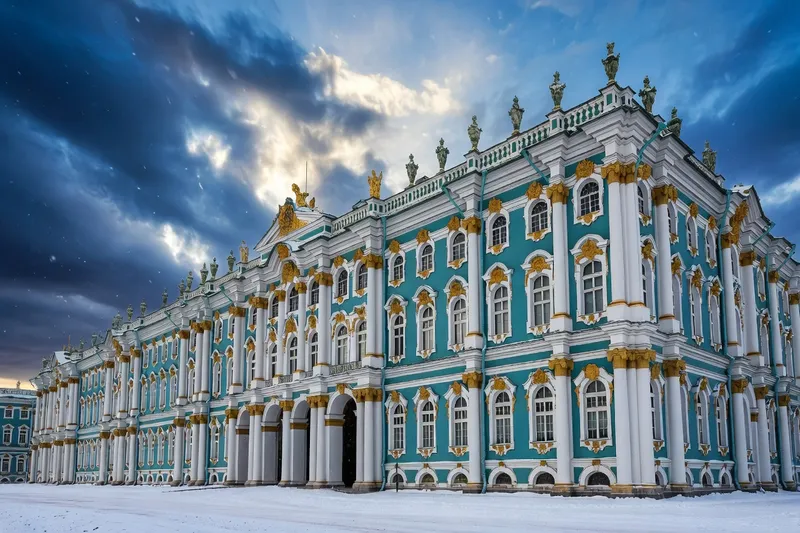
The creation of Saint Petersburg, founded in 1703 on the marshy delta of the Neva River at an enormous cost in human life (tens of thousands of conscripted labourers died in the construction), was simultaneously a strategic masterstroke and a cultural manifesto. The new capital faced westward, toward the Baltic Sea and Europe; it was built in the European Baroque style by European architects; it was named after the Tsar’s patron saint in the Dutch form (Sankt Peterburg) rather than the Russian. The old Muscovite capital and its conservative boyar culture were to be left behind.
Peter’s reforms were comprehensive and often brutal, touching nearly every dimension of Russian life:
| Domain | Reform |
|---|---|
| Social custom | Noble men required to shave beards; Western dress introduced |
| Administration | Table of Ranks links status to state service rather than birth |
| Military | Russian Navy founded; army rebuilt on European lines |
| Education | First Russian newspapers, schools of engineering and navigation |
| Church | Patriarchate abolished, replaced by a Holy Synod under lay control |
The price was paid in blood and suffering. The construction of Saint Petersburg, the wars against Sweden and Turkey, the taxation required to fund military expansion — all fell upon a peasantry already bound by serfdom. Peter’s reforms created a Westernised aristocratic culture in the cities while leaving the rural majority in the same poverty and ignorance as before. This split — between the educated, European-oriented cities and the traditional, conservative countryside — became a defining tension of Russian history and a central theme of Russian literature.
Revolution 1917: The End of the Old World
The two revolutions of 1917 — February and October — represent the most dramatic political rupture in modern history, ending a 300-year dynasty and creating the world’s first communist state.
The February Revolution was not planned by anyone. In late February (early March by the Western calendar) 1917, bread shortages and war weariness produced spontaneous strikes in Petrograd (as Saint Petersburg had been renamed in 1914). Soldiers sent to suppress the demonstrators joined them instead. Within days, the Tsarist administrative apparatus had ceased to function; Nicholas II abdicated on March 2, 1917. The Romanov dynasty, which had ruled Russia since 1613, ended not with a dramatic overthrow but with a collapse: the regime simply stopped working.
The October Revolution (November 7 in the Western calendar) was, by contrast, meticulously planned. Vladimir Ilyich Lenin, who had spent most of the preceding decade in exile in Western Europe, returned to Russia in April 1917 in the famous sealed train provided by the German government (which calculated, correctly, that his presence would destabilise Russia and take it out of the war). His April Theses — demanding an immediate end to the war, transfer of power to the Soviets, and no support for the Provisional Government — electrified the Bolshevik movement and isolated the moderate socialists.
The Bolshevik seizure of power on the night of October 25–26 was relatively bloodless: the Provisional Government, meeting in the Winter Palace, was arrested by Red Guards; the cruiser Aurora fired a blank shot as signal. The real violence came afterward: the Civil War of 1918–1922, in which the Red Army fought against a dozen White armies, foreign intervention forces, peasant insurgencies and nationalist independence movements, killed millions through combat, famine and epidemic. The Russian diaspora in Europe was created by this catastrophe.
The Soviet Era: Terror, War and Space
The Soviet period (1917–1991) produced both extraordinary achievements and unprecedented atrocities. Stalin’s collectivisation of agriculture (1929–1933) caused a famine that killed approximately five million people in Ukraine alone (the Holodomor) and several million more in Kazakhstan and other regions. The Great Terror of 1936–1938 executed approximately 750,000 people and sent millions to the Gulag labour camps. Total Soviet repression under Stalin is estimated to have killed between 6 and 20 million people (estimates vary widely depending on methodology and inclusions).
Key takeaway: The same Soviet system that killed millions of its own citizens through collectivisation and terror also defeated Nazi Germany in the deadliest conflict in human history — a duality of catastrophe and achievement that runs through the entire Soviet period.
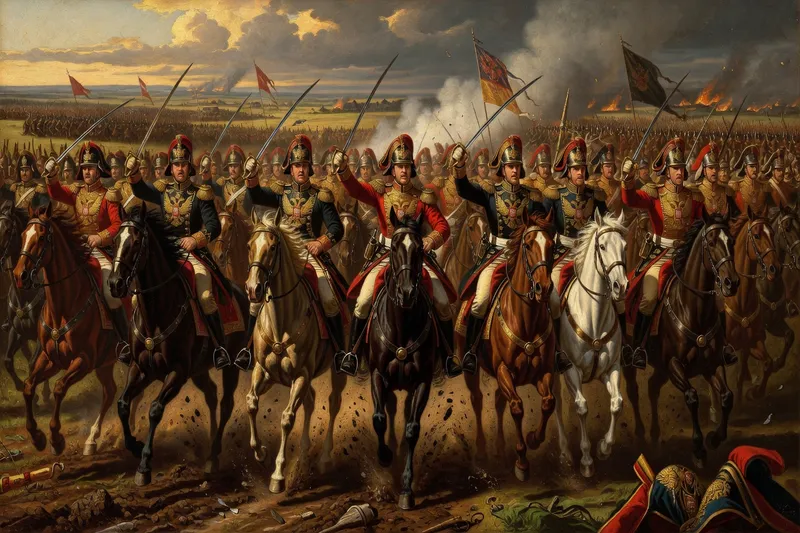
Yet the same system defeated Nazi Germany in the Great Patriotic War (1941–1945) — the most destructive conflict in human history, which killed approximately 27 million Soviet citizens. The siege of Leningrad, which lasted 872 days (September 1941 – January 1944), killed approximately 800,000 civilians through starvation and shelling. Stalingrad (August 1942 – February 1943), the pivotal battle of the Eastern Front, killed approximately 800,000 Axis soldiers and wounded or captured the rest of an entire German army group. The Soviet victory at Kursk in July 1943, the largest tank battle in history, permanently reversed the German advance.
The post-war Soviet Union achieved genuine scientific and technological advances alongside continued repression. Sputnik, launched October 4, 1957, inaugurated the Space Age. Yuri Gagarin’s orbit of the Earth on April 12, 1961, made him one of the most celebrated humans who ever lived. Soviet science, mathematics and engineering achieved world-class standards despite — perhaps partly because of — the competitive pressure of the Cold War.
Key Russian cultural concepts — the collective endurance expressed in the concept of mir, the fatalistic optimism of avos’, the soul-weight of toska — find their most extreme expression in the Soviet experience: a people surviving terrors of a magnitude that would have destroyed a less resilient civilisation.
Post-Soviet Russia: From Chaos to Stability
The Soviet collapse of 1991 unleashed forces that proved far harder to manage than anyone anticipated. Boris Yeltsin’s Russia attempted simultaneously to create a market economy from scratch, democratise the political system, manage the dissolution of empire, and maintain social cohesion — tasks that would have taxed any government. The consequences of this transition were severe:
- GDP fell approximately 40% in the early 1990s
- Hyperinflation destroyed personal savings overnight
- Privatisation transferred state assets to a small group of well-connected insiders (oligarchs)
- Crime and corruption became endemic across the economy
The Russian diaspora in Europe gained a new wave of emigrants from this chaos: economic migrants, educated professionals fleeing collapse, and eventually political dissidents as the Putin period brought greater stability but also tightening authoritarian control. The relationship between this new diaspora and the older émigré communities — the children and grandchildren of the White Russian exile — has been complex and sometimes tense.
Vladimir Putin’s accession to power in 2000 brought a degree of political stability and, during the oil boom years of the 2000s, significant economic growth. His project of restoring Russian state power and international prestige resonated with a population exhausted by the chaos of the 1990s. The costs — the erosion of democratic institutions, the suppression of free media, the wars in Chechnya, Georgia and Ukraine — became increasingly apparent over time.
The full historical assessment of contemporary Russia remains impossible while the story continues to unfold. What is certain is that Russian history — with its cyclical alternation between opening and closing, reform and repression, Westernisation and reaction — continues to shape not only Russia but Europe and the world. Understanding this history is prerequisite for understanding contemporary Russia, its culture, and its people. Bridesrussians.com provides one perspective on the living humanity behind these historical processes — the Russian men and women who carry this complex inheritance into daily life.
Frequently Asked Questions
The traditional founding date of the Russian state is 862, when the Varangian (Viking) chieftain Rurik was invited to rule Novgorod, according to the Primary Chronicle. His successor Oleg moved the capital to Kiev around 882, unifying the Varangian-Slavic principalities into Kievan Rus. The Baptism of Rus in 988 under Vladimir I consolidated the political and cultural foundations of what would become Russia.
The Mongol invasion of 1237–1241 under Batu Khan and Subutai was catastrophic: Kiev, Vladimir, Ryazan and dozens of other cities were destroyed; the population fell by an estimated 30–50%. Russia remained under Mongol suzerainty (the 'Tatar Yoke') for approximately 240 years, a period during which it was cut off from the Renaissance and the developments transforming Western Europe. Historians debate whether this isolation fundamentally shaped Russia's subsequent divergence from Western political development.
Peter I (1672–1725) transformed Russia from a largely medieval Muscovite kingdom into a European great power through a programme of radical Westernisation. He created the Russian Navy, founded Saint Petersburg as a Western-style capital in 1703, reorganised the military on European lines, introduced Western dress and customs at court, established the Table of Ranks linking social status to state service, and subordinated the Church to the state. His methods were often brutally coercive, but the transformation was real and lasting.
The 1917 Revolution had multiple causes: the enormous casualties and governmental incompetence of World War I, the alienation of the urban working class from the Tsarist order, the failure of agricultural reform to address peasant land hunger, the weakness of Nicholas II as a ruler, and the radicalisation of the intelligentsia over decades of repression. The February Revolution was largely spontaneous — soldiers joining striking workers; the October Revolution was a deliberate Bolshevik seizure of power exploiting the weakness of the Provisional Government.
The Soviet collapse resulted from a combination of structural economic failure (the planned economy could not compete with Western technology or meet consumer needs), the military and economic drain of the Afghan War (1979–1989), Gorbachev's political reforms (glasnost and perestroïka) which unleashed forces he could not control, and the cascade of declarations of independence by Soviet republics following the failed coup of August 1991. The formal dissolution was signed on December 25, 1991.