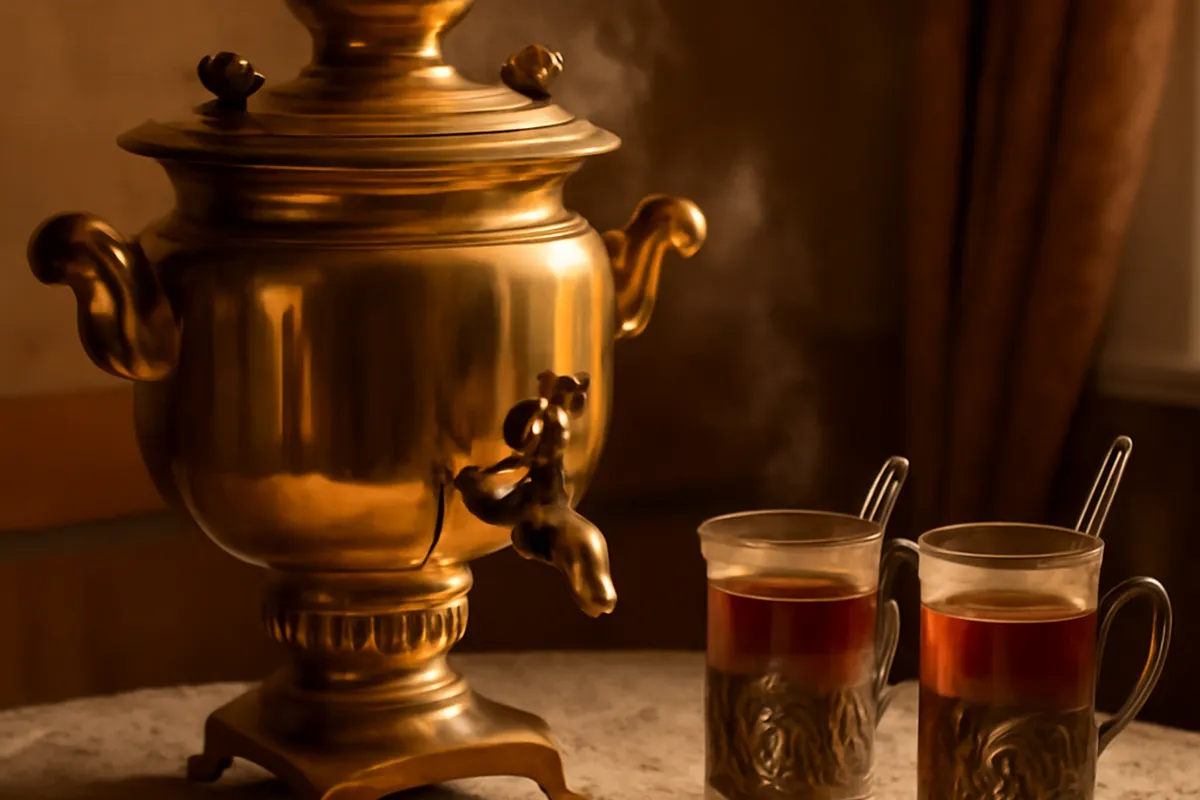
The Samovar, a Central Object of Russian Sociability
The samovar, an emblem of Russian conviviality, is far more than a simple kitchen utensil — it is a symbol of culture and sociability in Russia. This iconic object, often adorned with intricate motifs, stands proudly at the center of many Russian tables, serving not only to prepare tea, but also to bring people together around a warm and welcoming ritual. In Russia, teatime is a tradition that transcends generations, creating a bond between past and present and strengthening social relationships. According to some cultural studies, about 70% of Russian families still own a samovar, a testament to its continued importance.
The table below summarizes the essential facts about the samovar:
| Aspect | Detail |
|---|---|
| Origin | 18th century, Tula, a Russian city renowned for its metalworking |
| First patent | 1778, granted to Ivan Fyodorovich Lisitsyn |
| How it works | Central tube heating the water in the surrounding tank |
| Standard capacity | About 3 to 5 liters for a family model |
| Beverage prepared | Zavarka (tea concentrate) diluted with hot water from the samovar |
| Status today | About 70% of Russian families own one; a cultural symbol and collector’s item |
The role of the samovar in Russian daily life runs deep. Historically, it was used not only in homes but also in inns and train stations, where large samovars supplied tea to entire crowds. This tea tradition fits into a broader context of Russian traditions that value community and sharing. The samovar symbolizes hospitality, with each cup of tea serving as an invitation to conversation and intimacy. Indeed, samovars are often passed down from generation to generation as treasured family heirlooms.
Moreover, samovars have often been at the center of political and philosophical discussions, notably in the 19th century, when the Russian intelligentsia gathered to debate the country’s future. This tea ritual, simple as it may appear, played a crucial role in shaping modern Russian identity. It is worth noting that some of the greatest Russian writers, such as Tolstoy and Dostoevsky, frequently mentioned the samovar in their works, underscoring its cultural and social importance.
History and Origins of the Samovar
The origins of the samovar date back to the 18th century, although there is debate over the exact date and place of its invention. Some historians credit its invention to Tula, a Russian city renowned for its metalworking. The first samovar patent is said to have been granted in 1778 to Ivan Fyodorovich Lisitsyn in Tula, marking the beginning of mass production of the device. At the time, Tula was a major industrial center, producing not only samovars but also weapons and tools, which explains why Tula samovars are often considered the finest.
The samovar evolved over the centuries, influenced by various artistic styles, such as rococo and baroque, which left their mark on its shapes and ornamentation. In the 19th century, samovar production intensified, with models ranging from simple utilitarian pieces to richly decorated items intended for the Russian elite. These objects are often regarded as works of art, found in collections of Russian visual arts. Moreover, during the Soviet period, samovar production experienced another peak, as they were used as symbols of socialist camaraderie at collective gatherings.
A notable historical episode is the use of samovars during the Great Patriotic War (1941-1945). While factories were often requisitioned for the production of war materiel, samovars continued to be produced in limited quantities, warming spirits and bodies on the front lines. After the war, the samovar was celebrated as a symbol of Russian resilience.
The major periods in the history of the samovar can be summarized as follows:
- 18th century — invention in Tula, an industrial city renowned for its metalworking; first patent granted in 1778.
- 19th century — intensified production, influenced by rococo and baroque styles, with models ranging from simple utilitarian pieces to richly decorated items.
- Soviet period — a new production peak, with the samovar becoming a symbol of socialist camaraderie at collective gatherings.
- 1941-1945 — production maintained in limited quantities during the Great Patriotic War, despite the requisitioning of factories for the war effort.
- Contemporary era — coexistence of modern electric models and traditional coal-fired samovars, the latter sought after for their authenticity.
How It Works: The Central Tube Principle
The operation of a samovar rests on a simple but ingenious principle. At the center of the device is a vertical tube where fuel is placed — traditionally coal or wood. This tube heats the water contained in the tank around it, maintaining an ideal temperature for brewing tea. This system keeps the water hot for long periods without requiring constant reheating. On average, a standard-sized samovar can hold about three to five liters of water, which is enough to serve a small family gathering.
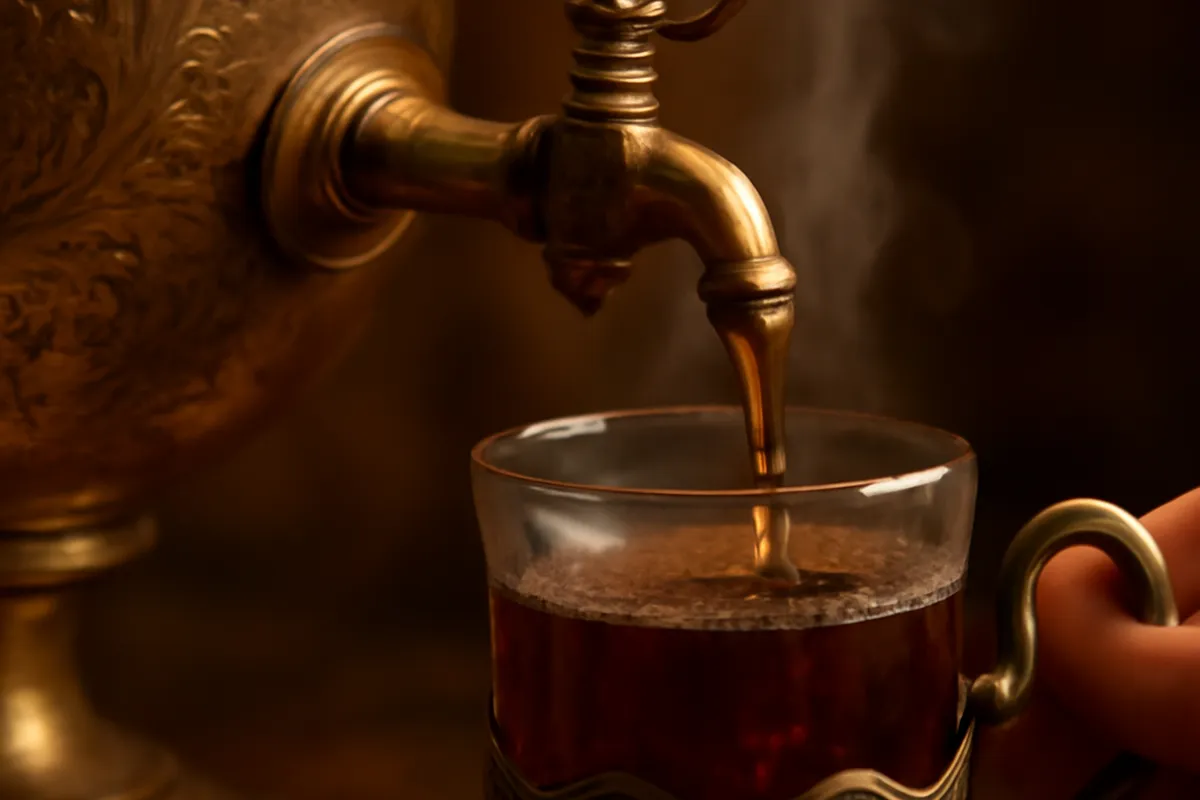
The innovation of the central tube allowed the samovar to stand out from other tea-preparation methods, making the process both efficient and convivial. The samovar thus remains a fascinating example of Russian ingenuity, combining functionality and aesthetics. This simple technology ensures constant heat, creating an atmosphere conducive to relaxation and conversation. In fact, samovars were so popular that they were used on grand occasions, such as weddings and religious festivals, where larger models — sometimes exceeding 20 liters — were used to accommodate large numbers of guests.
The table below compares the different samovar sizes according to use:
| Format | Capacity | Typical use |
|---|---|---|
| Small family model | 3 to 5 liters | Daily use for a small family gathering |
| Intermediate model | 8 to 15 liters | Extended family gatherings, regular visits |
| Large festive model | Over 20 liters | Weddings, religious festivals, major occasions |
| Inn or station samovar | Very large capacity | Serving tea to entire crowds |
For those interested in the engineering artistry of samovars, it is possible to visit the Samovar Museum in Tula, where examples from different eras are on display. This museum offers a fascinating immersion into the technical and cultural history of the samovar, providing insight into how this object evolved to become an essential element of Russian culture.
The Zavarka: Preparing the Tea Concentrate
Preparing tea the Russian way involves one essential element: the zavarka. This term refers to the tea concentrate prepared in a small teapot placed on top of the samovar. To make a zavarka, a generous quantity of tea leaves is left to steep for a long time in a small amount of boiling water, generally drawn from the samovar itself. On average, about 10 to 15 grams of tea are used to prepare a zavarka strong enough for several people.
The zavarka is then diluted with hot water straight from the samovar to obtain a cup of tea at the desired strength. This process allows each guest to personalize their tea according to their preferences, whether stronger or lighter. The zavarka is not merely a preparation method — it also embodies the art of patience and precision, values dear to Russian culture. In addition, the zavarka is often served with a lump of sugar or a spoonful of jam, which can be enjoyed on the side or mixed into the tea, according to personal taste.
In some regions of Russia, zavarka is also used as a base for preparing traditional alcoholic drinks, with local spirits added to it. This mixture, consumed during festivities, highlights the importance of tea not only as an everyday beverage, but also as a central element of cultural celebrations. For those interested in key Russian concepts related to hospitality, the zavarka is an excellent example of the importance placed on detail and personalization in social interactions.
Russian Tea Etiquette: Accompaniments and Customs
The Russian tea ritual goes far beyond the simple consumption of this beverage. It comes with a whole set of etiquette and traditions that enrich the experience. In Russia, tea is often served with various accompaniments such as jams, biscuits, small honey buns, and sometimes zakuski (small appetizers). These accompaniments vary by region and season, but their presence is essential to creating an atmosphere conducive to conviviality.
Hosts generously offer these treats to encourage conversation and sharing. Traditionally, tea is served in glasses fitted with metal holders called podstakanniki, which protect the hands from the heat. This practice is deeply rooted in the key Russian concepts of hospitality and generosity. Indeed, it is considered poor form not to offer something to eat with tea, as this could be seen as a lack of hospitality.
Russian tea etiquette also includes unwritten rules about how tea should be served and drunk. For example, it is customary to offer the first cup to the guest of honor or to the eldest person present. In addition, the host is generally expected to keep refilling cups as long as tea remains available, symbolizing abundance and respect toward guests. These customs, simple as they are, enrich the tea experience and strengthen social bonds.
The essential rules of Russian tea etiquette can be summarized as follows:
- Always serve tea accompanied by jams, biscuits, small honey buns, or zakuski.
- Use podstakanniki (metal holders) to protect the hands from the heat of the glass.
- Offer the first cup to the guest of honor or to the eldest person present.
- The host must keep refilling cups as long as tea is available, as a sign of abundance and respect.
- Never serve tea without an accompaniment, as this would be seen as a lack of hospitality.
- Never add milk in the English style; tea is diluted with hot water from the samovar according to each person’s taste.
Coal-Fired vs. Modern Electric Samovar
With technological progress, the samovar has also undergone transformations. While the traditional model ran on coal or wood, the modern samovar is often electric, offering simpler and cleaner use. Electric models are perfect for tea lovers who want to maintain the tradition without the constraints of solid fuel. Moreover, electric samovars are often equipped with thermostats that keep the water at a constant temperature, which is ideal for tea.
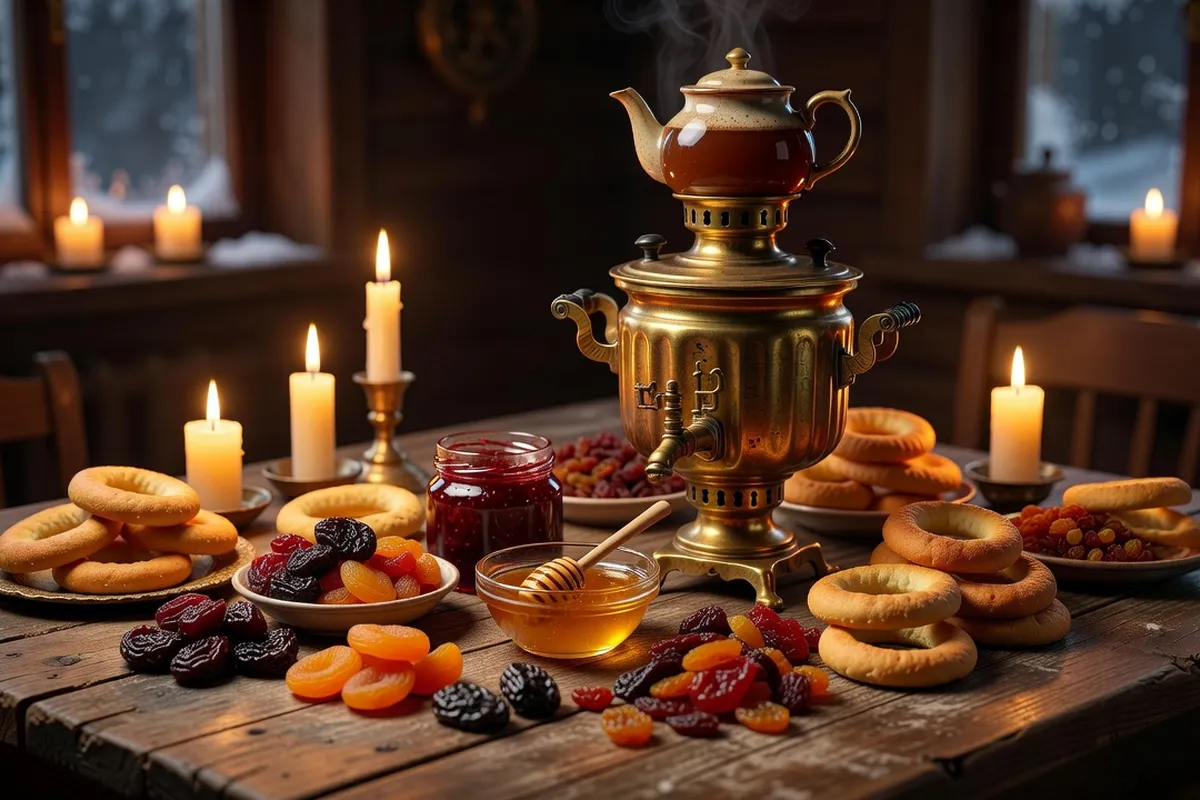
However, the charm of the coal-fired samovar lies in its authenticity and its connection to the past. Using a traditional samovar means reconnecting with an era when tea was prepared with care and every step of the process was rich with meaning. Electric models, while practical, do not offer the same nostalgic atmosphere as their fuel-burning counterparts. For some, the ritual of lighting the coal and the crackle of the fire are an integral part of the tea experience.
It is also worth noting that some craftsmen continue to make custom coal-fired samovars, often incorporating modern designs while respecting traditional techniques. These artisanal samovars can be found at craft markets or ordered directly from specialized craftsmen. They offer an appealing alternative for those who want to own a piece of history while still being able to use it daily.
The Samovar as a Cultural Symbol and Collector’s Item
Beyond its practical function, the samovar has become a Russian cultural symbol and a prized collector’s item. Antique models, often adorned with intricate artistic motifs, are highly sought after by collectors and can fetch considerable prices. They bear witness to the craftsmanship and unique design of each era. For example, a 19th-century samovar from Tula can be worth several thousand dollars on the antiques market.
The samovar is representative of Russian folklore and frequently appears in paintings, photographs, and literary works, reinforcing its image as a cultural icon. As a collector’s item, it offers a glimpse into the richness and diversity of Russian culture, attracting art and history enthusiasts from around the world. In addition, many museums in Russia and abroad devote permanent exhibitions to samovars, allowing visitors to discover their history and place in Russian culture.
For those interested in collecting samovars, it is advisable to learn about the different styles and periods, and to consult experts to authenticate pieces before purchase. Specialized fairs and auctions are regularly held, both in Russia and internationally, giving collectors the opportunity to acquire rare and unique pieces. These events are also occasions to meet fellow enthusiasts and exchange knowledge on this fascinating subject.
Recreating the Russian Tea Ritual at Home
For those who want to recreate the Russian tea ritual at home, there are several steps to follow. First, acquiring a samovar, whether traditional or electric, is essential. Next, selecting quality teas and delicious zavarkas ensures an authentic experience. Finally, choosing the accompaniments — jams, honey, pastries — is crucial to completing the picture. It is recommended to source artisanal jams and local honeys for an even more authentic experience.
Creating a welcoming atmosphere is also important. Invite friends or family to share this moment, and immerse yourself in the spirit of conviviality that characterizes Russian-style tea. By following these steps, you can not only discover a new culture, but also strengthen social bonds within your own circle. Consider organizing themed evenings around Russian tea, where everyone can bring a different accompaniment, further enriching the experience.
For those who wish to deepen their knowledge of Russian tea, workshops and courses are sometimes offered by specialized cafes and Russian cultural associations. These sessions provide a hands-on introduction to the art of preparing tea the Russian way, as well as an exploration of the different varieties of Russian tea available.
For more information on Russian cultural events and artistic expressions, see these Russian art and culture events.
Frequently Asked Questions
The samovar is a traditional Russian metal kettle that heats water continuously through a central tube filled with coal or embers, allowing tea to be served all day.
A central vertical tube heats the surrounding water; a strong tea concentrate (zavarka) is prepared separately and diluted to taste with hot water from the samovar.
Modern electric samovars have largely replaced coal-fired models in homes, but the object remains a strong symbol of Russian hospitality.
Tea is served strong and diluted to each person's taste, often accompanied by jam, honey, or lemon, never with milk in the English style.
The word literally means 'self-boiler' in Russian, reflecting its function of continuously self-heating water.