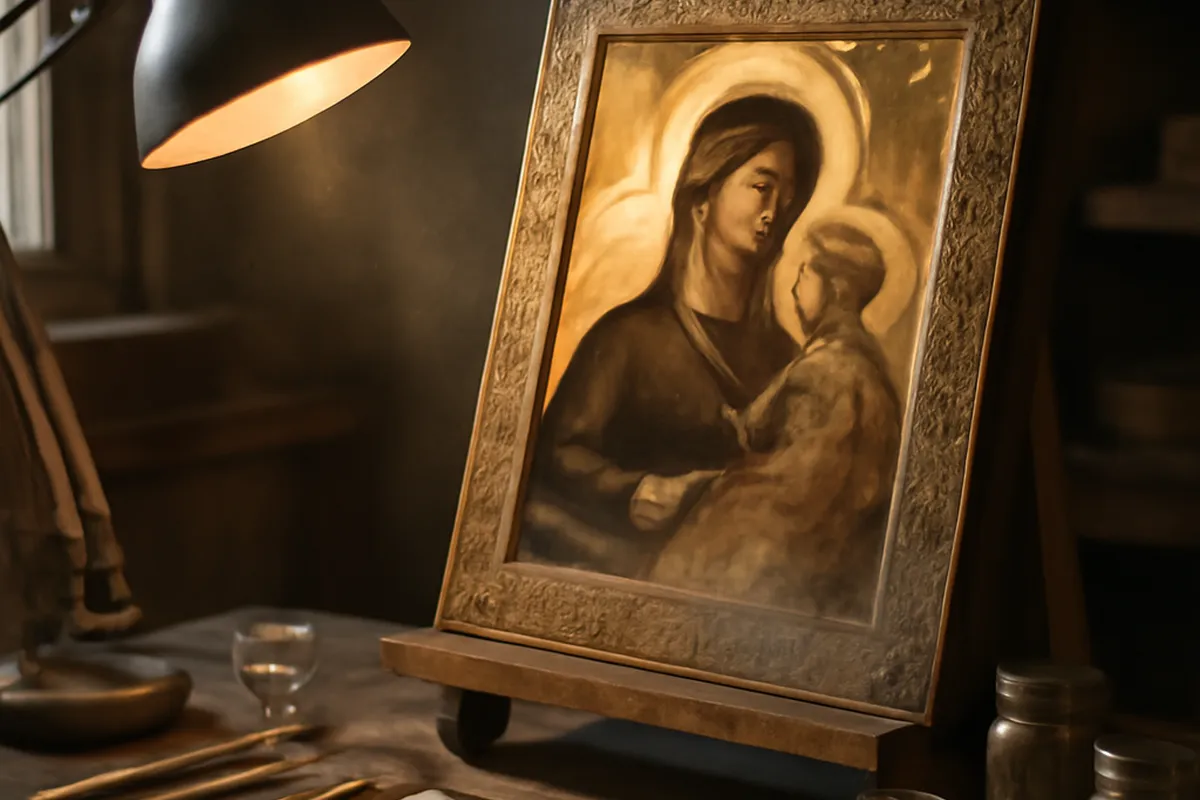
In this exclusive interview, Camille Duret speaks with Elena Vassilieva, an Orthodox icon conservator-restorer based in Brussels. With 22 years of experience, Elena has devoted her career to restoring ancient Russian icons dating from the 16th to the 19th centuries. She shares the challenges of her craft, her techniques, and her reflections on the ethics of restoration.
Camille Duret: Elena, your profession demands immense patience. Can you tell us about your daily life as an icon restorer?
Elena Vassilieva: Absolutely, it’s truly a work of patience. Every morning I start by assessing the icons I’m working on, examining every detail closely. This alone can take several hours, because it’s crucial to understand the damage before beginning any intervention. Humidity, for instance, can cause cracking in the paint layer, while candle smoke can darken the original colors over decades of exposure in a church. Every icon has its story, and it’s by respecting the material and that story that I can hope to bring these works back to life. How I organize my day often depends on the specific needs of each piece and the techniques I plan to use. On average, I can spend up to 100 hours a month on a single icon, which shows the personal commitment required to achieve a successful restoration. For art lovers, it’s worth consulting our Key Russian Concepts guide, which offers more context on the origins of these works. The importance of preserving these pieces cannot be overstated, especially given their inestimable cultural value for the Russian diaspora in Europe. One of my most memorable experiences was restoring an 18th-century icon that had been badly damaged during a storm. Every crack told the story of that storm, and the repair required an extremely meticulous approach. Beyond the technical work, every restoration project reminds me of the importance of Russian culture and its impact on historical and spiritual identity across Europe. For those who want to go deeper, our section on Russian Orthodox Spirituality offers enriching perspectives.
Camille Duret: What are the main types of damage you encounter when restoring icons?
Elena Vassilieva: The damage caused by time is extensive. Humidity, for example, is one of the worst enemies of icons. It can cause the wooden panel to swell and shrink, which in turn produces cracks. Candle smoke, very common in churches, leaves a soot deposit that obscures the original colors. On top of that, earlier restorations sometimes cause problems of their own — certain techniques used decades ago are no longer considered acceptable today. For instance, the use of synthetic varnishes in the 1970s often sealed the paint layer in an irreversible way. That has required developing new methods to remove these layers without damaging the original paint underneath. Water damage is also frequent, especially after floods, which has happened several times in Central Europe. In such cases, icons may need special attention to stabilize both the pigments and the wooden support. The challenge is also to integrate modern methods while respecting traditional techniques, a delicate but necessary balance to maintain the historical integrity of the work. Another anecdote concerns an icon I restored after it was damaged by a fire. The heat had partially melted the frame, and we had to recreate entire sections from old photographs. This kind of experience highlights the importance of expertise and innovation in our craft. Preserving these works is crucial for the continuity of religious and cultural heritage, a topic we also explore in our discussion of Russian Orthodox Spirituality.
Camille Duret: What cleaning and consolidation techniques do you use?
Elena Vassilieva: Techniques vary depending on the icon and its condition. For cleaning, I often use controlled solvents that dissolve layers of dirt without damaging the paint layer underneath. For consolidation, it’s essential to stabilize the paint layer, often by injecting a special adhesive into the cracks. It’s a delicate process that requires respecting the material at every step. We also use reversible illusionist retouching to restore the original appearance without masking the historicity of the piece. Every step must be carefully planned and executed with precision.
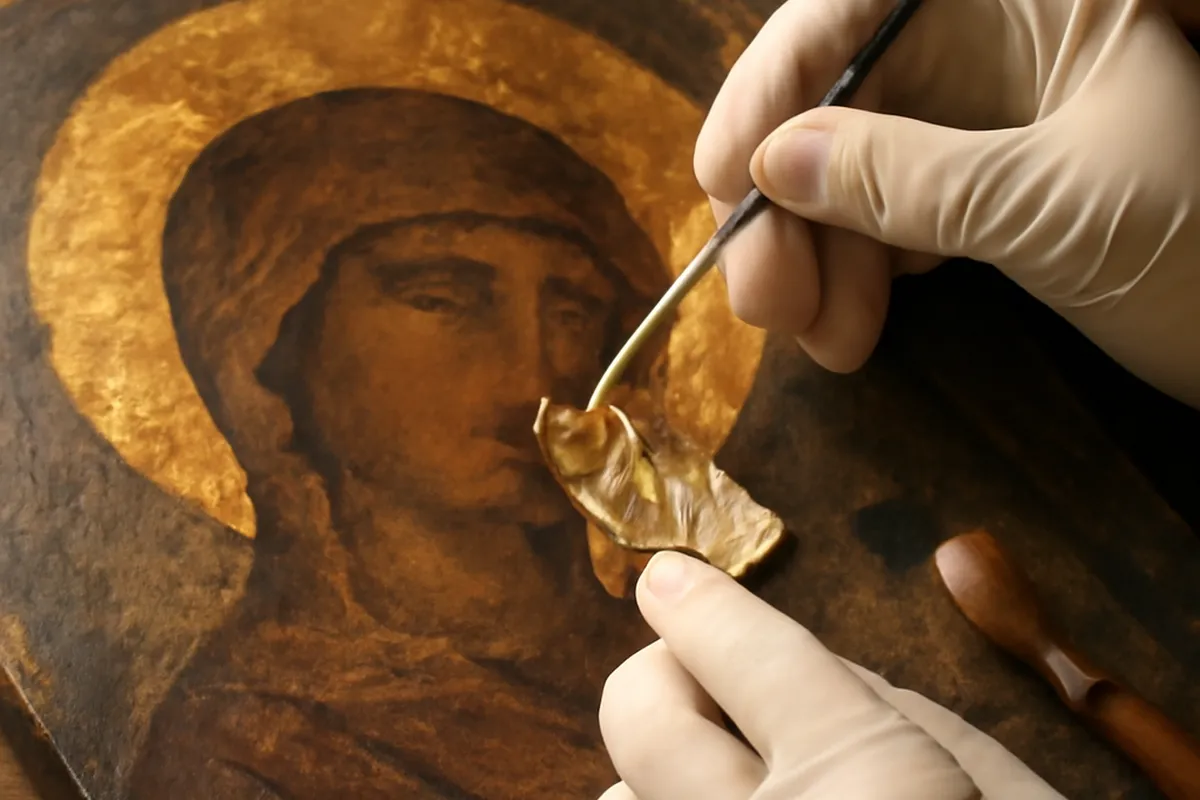
For example, while restoring an 18th-century icon, we managed to preserve the integrity of the paint while removing layers of varnish that had darkened over time. That process took about six months, showing just how much of a long-term investment restoration can be. For art enthusiasts, discovering cultural events such as Russian folk art and culture events can enrich one’s understanding of the artistic techniques involved. Another technique I have recently adopted is the use of UV light to better identify areas requiring special attention, which has considerably improved the precision of my restorations. Working alongside technology experts, we have been able to integrate advanced methods that guarantee optimal preservation. In addition, collaborations with research institutes allow us to constantly improve our methods.
| Damage type | Common cause | Typical intervention |
|---|---|---|
| Cracked paint layer | Humidity swelling the wood panel | Consolidation with reversible adhesive |
| Darkened colors | Candle smoke and soot deposits | Controlled solvent cleaning |
| Lost gold leaf | Age, handling, previous poor restoration | Careful re-gilding matched to original technique |
| Warped or split panel | Water damage, temperature swings | Structural reinforcement of the wooden support |
Camille Duret: Is there an ethical dilemma in your work? How far can you go in restoring a piece without betraying the original?
Elena Vassilieva: Yes, the ethical dilemma is ever-present in our work. Restoring an icon also means taking responsibility for not altering the artist’s original intention. It’s crucial to decide how far to go with a restoration. Sometimes it’s better to leave part of the work as it is in order to preserve its authenticity. For example, a 17th-century icon I restored had significant losses in the paint layer. My choice was to stabilize what remained without attempting to complete the missing sections. It’s a matter of respect for the work and its history. Another situation I encountered involved an icon where previous restorations had added elements that were not historically present. In that case, I chose to remove those additions to return to a more faithful representation of the original. To explore this further, I recommend reading about Russian Orthodox Spirituality. This respect for the original is essential to preserving the spiritual and cultural meaning of icons, an aspect often discussed within conservation circles. It’s also worth noting that every ethical decision made today can influence future restorations, which is why documenting every step of the process matters so much. Many restorers share these dilemmas at international conferences, which enriches our collective understanding. Thorough documentation of each restoration also makes it possible to trace an icon’s history through time.
Key takeaway: The restorer’s job is not to erase time but to stabilize it — every intervention must be reversible, and every choice must be justified against the icon’s own history rather than a modern idea of “perfection.”
Camille Duret: What materials are essential in your restoration practice?
Elena Vassilieva: Materials are at the heart of restoration. The wood used for icon panels is often linden or birch. Natural pigments are essential for retouching, since they guarantee compatibility with the original materials. Gold leaf is also frequently used to restore the gilded sections of icons, but this requires great precision so as not to overload or alter the work. Finally, specific adhesives are used for paint consolidation, always keeping their reversibility in mind to allow for possible future restorations. It’s also crucial to source materials that meet environmental standards, since some older techniques used toxic substances that are banned today. In my workshop, for instance, we have replaced animal-based glues with plant-based alternatives without compromising effectiveness. This eco-conscious approach is crucial at a time when sustainability is becoming a major concern, not just in art but across every sphere of life. In addition, using durable materials helps extend the life of icons, which is essential for preserving this cultural heritage for future generations. Restorers around the world are increasingly aware of these issues and are adopting similar practices. Techniques keep evolving thanks to research and development, allowing for a more respectful and sustainable approach to restoration.
- Linden or birch wood panels, chosen for stability and workability
- Natural mineral and organic pigments matched to the original palette
- Gold leaf applied with traditional gilding techniques
- Reversible, conservation-grade adhesives for paint layer consolidation
Camille Duret: What are the most memorable icons you’ve restored in your career?
Elena Vassilieva: Every icon is unique, but some remain especially memorable. In 2015, I restored a 17th-century icon of the Kazan Mother of God. It had been badly damaged by a flood. It was a project that took several months, but seeing the icon regain its original splendor was incredibly rewarding. Another memorable icon was a 16th-century Saint Nicholas, where the gold leaf had almost entirely been lost. The restoration work uncovered details hidden beneath a layer of soot. These projects are a reminder of how important it is to preserve cultural heritage. While working on these projects, I collaborated with art history experts to make sure every decision respected the historicity of the pieces. This shows how important interdisciplinary collaboration is in our field. For those interested in cultural influence beyond the workshop, our article on Russian Diaspora in Europe offers a fascinating look at the impact of Russian art abroad.
Another memorable project was restoring a Saint George icon, where the restoration revealed intricate leaf and flower motifs that had been hidden under centuries of dust and soot. These experiences show just how much restoration is both a technical and an emotional adventure. Working on historical icons also brings a deeper understanding of ancient artistic techniques and how they evolved over time.
Camille Duret: How do you pass your expertise on to the next generation?
Elena Vassilieva: Passing on this expertise is essential for the survival of our craft. I regularly teach workshops and training courses for young restorers. I emphasize the importance of patience and respect for materials — two pillars of our practice. In 2020, I started a mentorship program that lets young professionals learn directly by working on real projects. It’s a way to make sure this expertise isn’t lost and keeps adapting to new techniques and technologies. We have recently integrated 3D scanning and spectrographic analysis to document restoration steps, which allows young restorers to acquire modern skills while still respecting traditional methods. For those interested in the impact of Russian culture across different artistic fields, our article on Russian Cinema & Theatre might be revealing. These technological innovations considerably enrich the training of new generations, giving them tools to better understand and preserve our shared heritage. In addition, the continuing education we offer also includes modules on the ethics of restoration, an essential aspect of decision-making in this field. Every generation of restorers brings new perspectives, and it’s crucial to encourage this exchange between generations. International exchanges at symposiums and conferences also strengthen these ties across generations.
Camille Duret: What is the state of Russian iconographic heritage in Europe, and how is it being preserved?
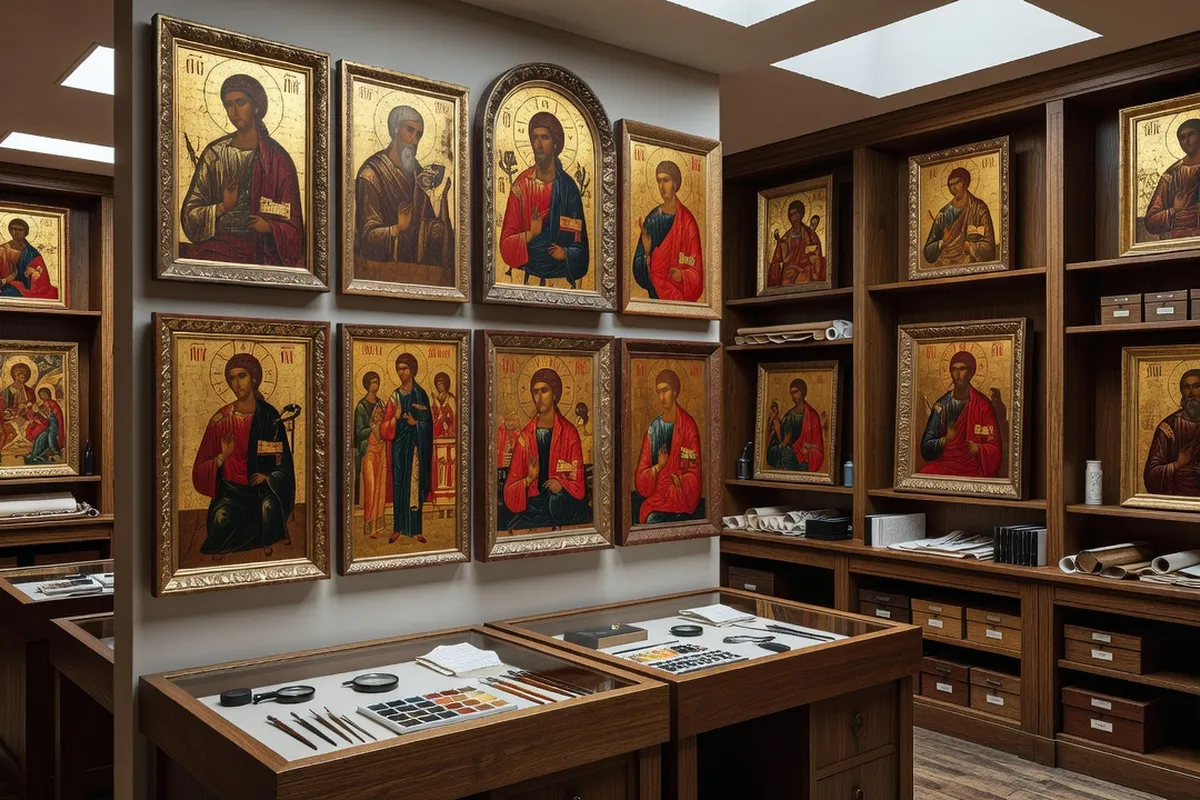
Elena Vassilieva: Russian iconographic heritage in Europe is rich and varied, but it requires constant attention. Many icons were displaced during revolutions and wars, and today sit in private or public collections. Preservation depends on collaboration between museums, private collectors, and restorers. It’s also important to raise public awareness of the importance of these works. In 2019, an exhibition in Brussels helped highlight the diversity of Russian icons across Europe. Collaboration with institutions such as the Hermitage Museum or the Pushkin Museum in Moscow has also strengthened preservation efforts. Local initiatives, such as restoration workshops organized in monasteries, also help spread conservation techniques. For more information on cultural events tied to Russian art, visit Russian folk art and culture events. These preservation efforts are crucial to ensuring future generations can appreciate these artistic treasures, living testimonies of Russia’s rich cultural history. It’s also worth noting that European grants play a crucial role in preserving this heritage, funding long-term research and restoration projects. Active participation from local communities is also a key factor in the success of these initiatives. Cultural exchanges and twinning between European and Russian cities also enrich this shared heritage.
| Preservation factor | Role |
|---|---|
| Museums (Hermitage, Pushkin) | Institutional collaboration, expertise, and long-term storage conditions |
| Private collectors | Custodianship and access for scholarly research |
| Monastery workshops | Grassroots transmission of traditional restoration techniques |
| European grants | Funding for long-term research and restoration projects |
Tip: If you inherit or acquire an old icon, resist the urge to clean it yourself, even with a soft cloth. Have it assessed by a professional restorer first — irreversible damage is most often caused in the first well-meaning attempt at cleaning.
Camille Duret: Five rapid-fire true-or-false questions.
Elena Vassilieva:
-
Restoring an icon is quick work. False. Restoration can take months, even years, depending on the extent of the damage. A large icon, for example, can require up to two years of work to be properly restored.
-
You can restore an icon yourself at home. False. A poorly executed restoration can cause irreversible damage. Even minor mistakes can lead to the loss of priceless detail.
-
Modern pigments are always used. False. We favor natural pigments for their compatibility with the original materials, since they offer better color preservation over time.
-
Icons can be restored more than once. True, but every intervention must be justified and respectful. Each restoration must be carefully documented for future interventions.
-
Wood is the only support used for icons. False. While wood is the most common support, icons on metal and other materials also exist, requiring specific restoration techniques.
Camille Duret: Any final advice for those interested in icon restoration?
Elena Vassilieva:
- Learn from the best. Seek out experienced mentors and commit to ongoing training. Hands-on experience is invaluable in this field.
- Respect every work. Treat each icon with respect, keeping its history and spiritual meaning in mind. That includes understanding the religious and cultural context of each piece.
- Be patient. Restoration is a slow and meticulous process that requires patience and attention to detail. Never rush the steps — every detail matters.
Quick reference: what a restorer checks before touching an icon
- Overall condition of the wood panel (cracks, warping, insect damage)
- State of the paint layer (flaking, soot buildup, previous overpainting)
- Condition of the gold leaf and any gilded ornamentation
- History of prior restorations and materials used
- Environmental conditions of storage or display (humidity, light, temperature)
To explore Russian cinema and theatre further, see Russian Cinema & Theatre. For more on Russian heritage in Europe, read our article on Russian Diaspora in Europe. You can also discover other cultural events tied to Russian art through Russian folk art and culture events.
Frequently Asked Questions
She cleans, consolidates, and restores the ancient pictorial layers of Orthodox icons damaged by time, humidity, or unsuitable earlier restorations.
Controlled solvent cleaning, consolidation of the paint layer, reversible illusionist retouching, and sometimes reinforcement of the wooden support (linden or aspen panel).
No, poorly mastered restoration can permanently destroy the original paint layer; always consult a professional restorer trained in sacred art conservation techniques.
Depending on condition, from several weeks to several months of meticulous work, especially for badly damaged old icons.
There are workshops specializing in Orthodox sacred art restoration in France, often linked to parishes or Russian art museums.